
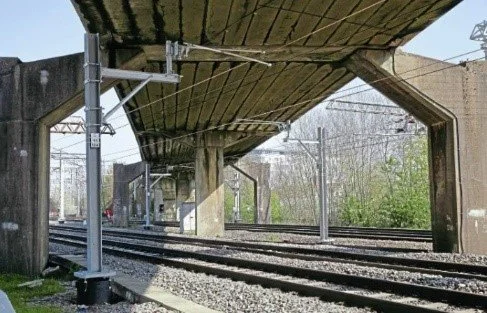
Bletchley Flyover | East West Rail
Challenge
Budget
£40 Million project for Bridge Refurbishment
Duration
Duration: 2 Years, 6 Months
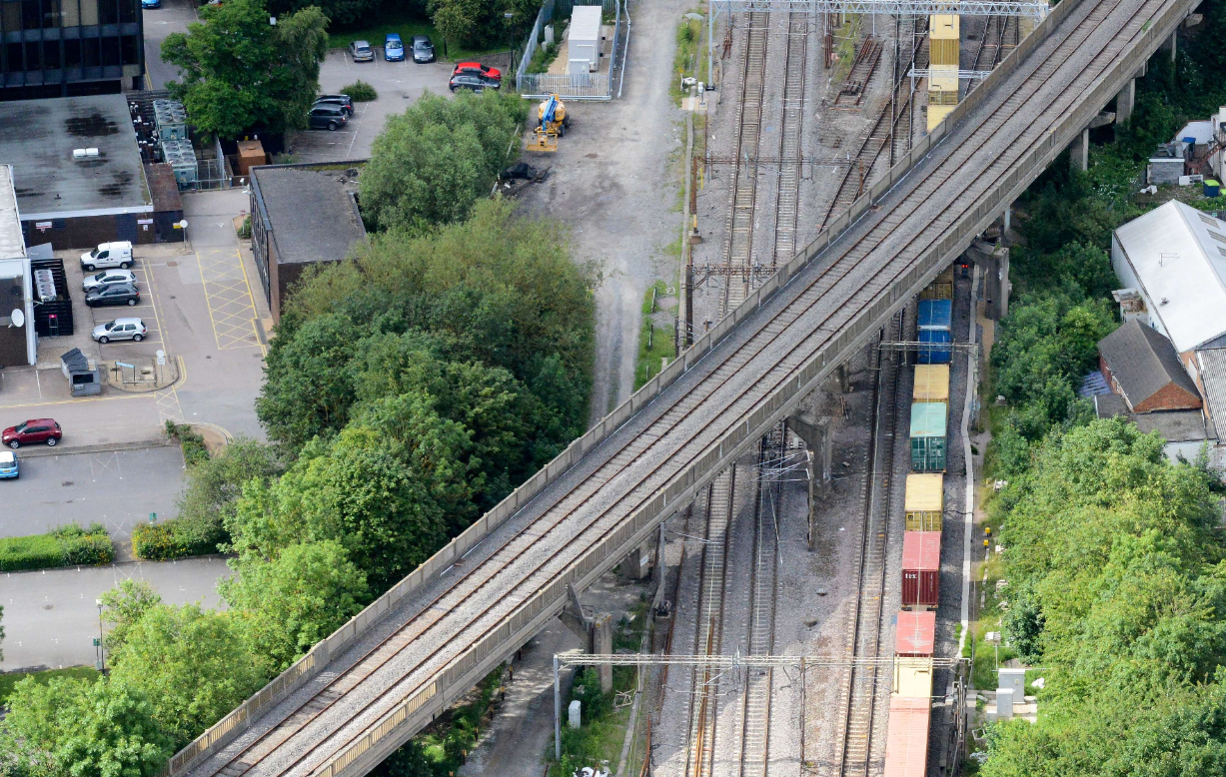
Refurbishment of a highly constrained, 37 span post-tensioned concrete viaduct structure over the west coast mainline (WCML) with significant deterioration and design flaws impacting structures performance under proposed railway live loading.
Refurbishment scheme required complex temporary works to mitigate construction risk when lifting half jointed decks and crossbeams out for refurbishment. Temporary works included 160m and 21m gantries supported on the bridge, SPMT vehicles for gantry transportation and temporary/permanent works connections for lifting operation.
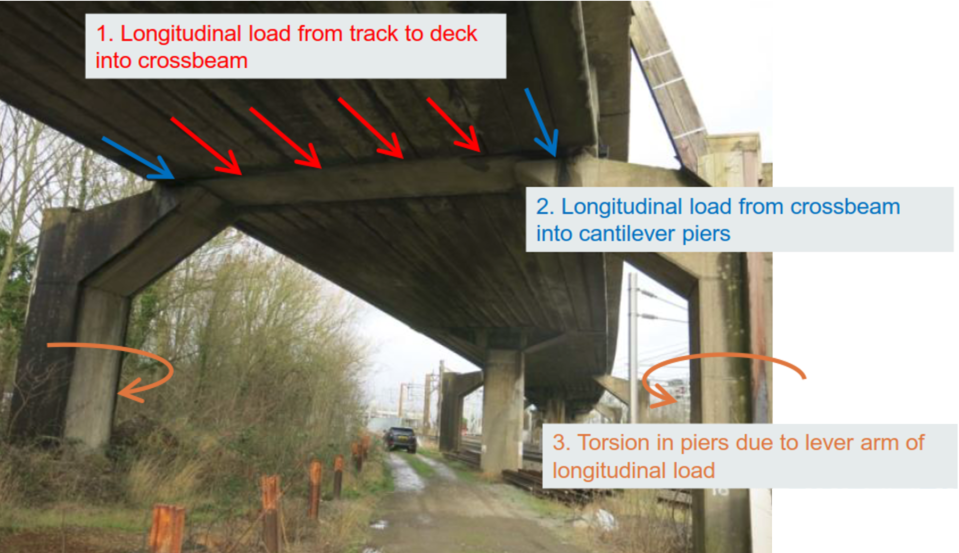
Figure 1 - Substandard post-tensioned portal pier crosshead replacement required over WCML. Due to half joint constraints, decks and crossbeam need to be lifted out.
Solution
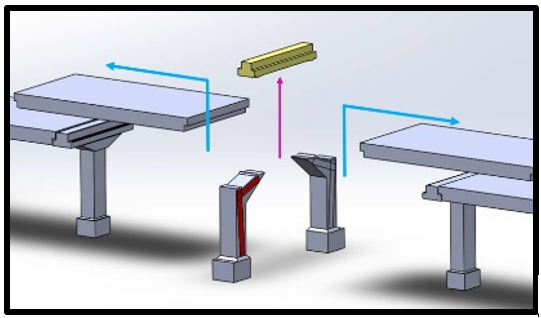
The complexity of the temporary works proposal posed a challenging assessment task as the bridge would be subjected to a wide range of co-existent loads which it was not designed for. To investigate the effects of the temporary works on the permanent structure, our engineer developed bespoke finite element models for analysis. The bespoke models were used to identify where the risk to the permanent structure is and where modification/improvement of the temporary works proposal was required.
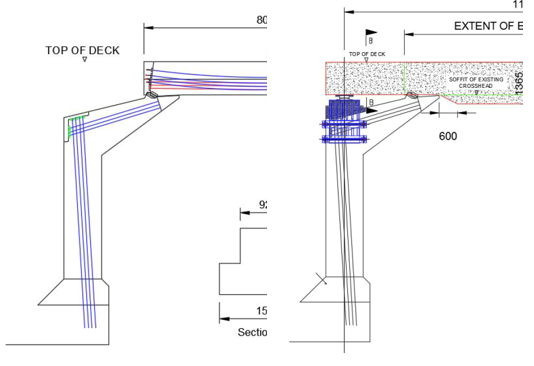
Figure 2 - Existing WCML pier crosshead detail (Left), Proposed WCML pier crosshead detail (right)
Some of the key assessment work undertaken by the Engineer on this project were:
Assessment of the substructure for loading imposed by the 160m and 21m gantry in their operational position on top of the Viaduct.
Assessment of the allowable torsion and deflection of the deck during the lifting operation. Decks were to be repaired and refurbished for reuse therefore allowable stress in elements were limited to Serviceability Limit State. Undertaken on all 8 different span types.
Effects of ‘Dejamming’ operation (to free the decks from the piers) on precast prestressed concrete beam decks. This analysis identified the jacking limits which could be exerted onto the deck without exceeding the Serviceability Limit State stress values in the beams.
Assessment of whole viaduct during transportation of the temporary works gantries on moving self-propelled modular transporter (SPMT) units.
Assessment of foundations under temporary gantry loads. Design of tee pier pile cap strengthening scheme under temporary and operational loads.
Partnership
Results
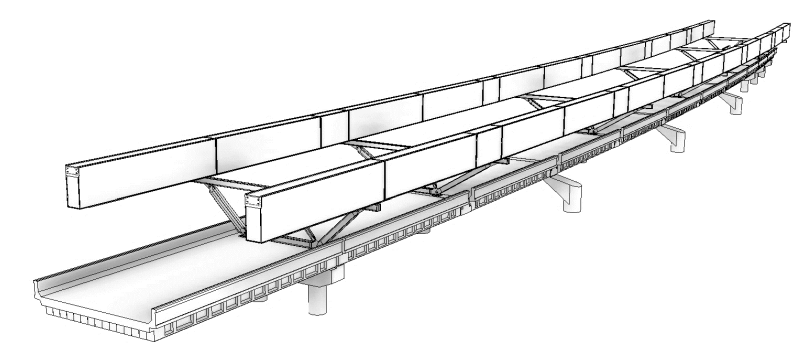
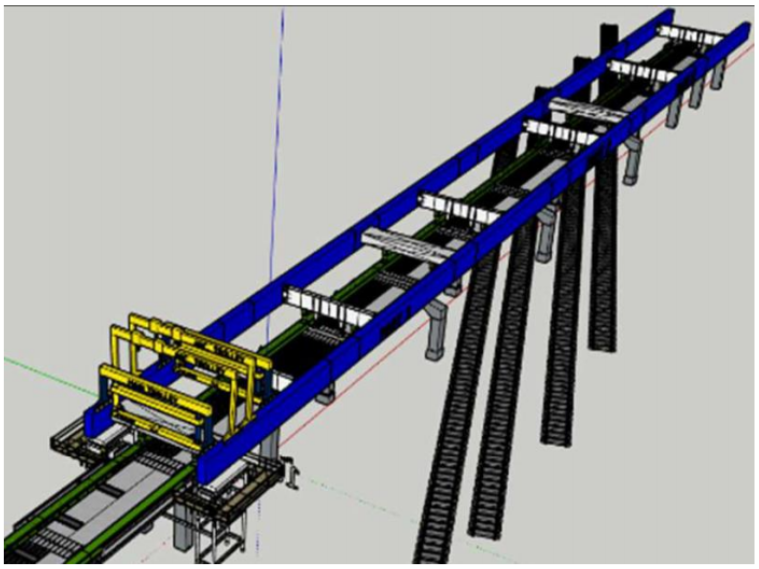
Figure 3 - Proposed temporary gantry over WCML
Key to this project success was the open and honest discussion between the engineer and the temporary works contractor. The engineer’s comments on how to protect the permanent structure through temporary works modification were taken on board by the contractor for a design iteration. Through understanding the temporary works contractors needs and design constrains, the LBR Engineer was able to give multiple design change options for each design iteration. To streamline the assessment and design process, the LBR engineer utilised automation with Finite Element models and design calculations, saving vast amounts of time and money on repetitive analyses without compromising quality or safety.
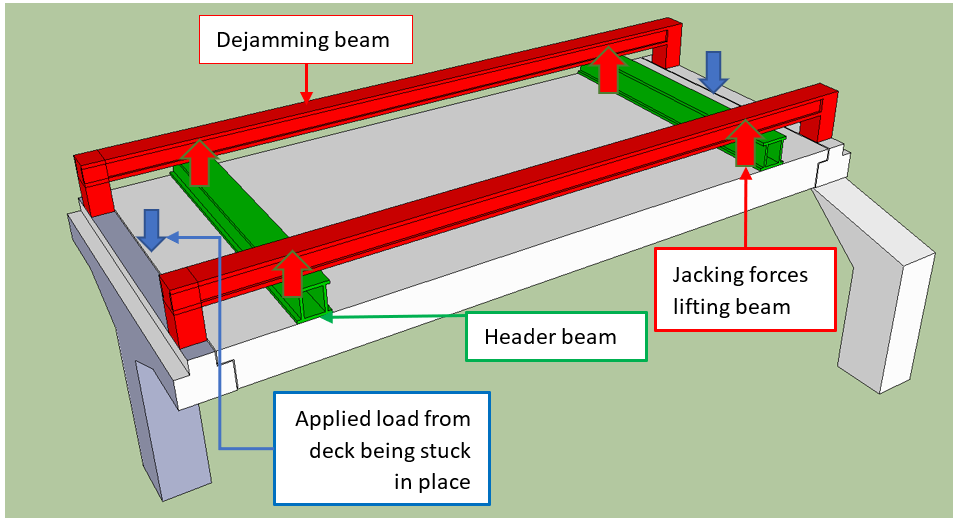
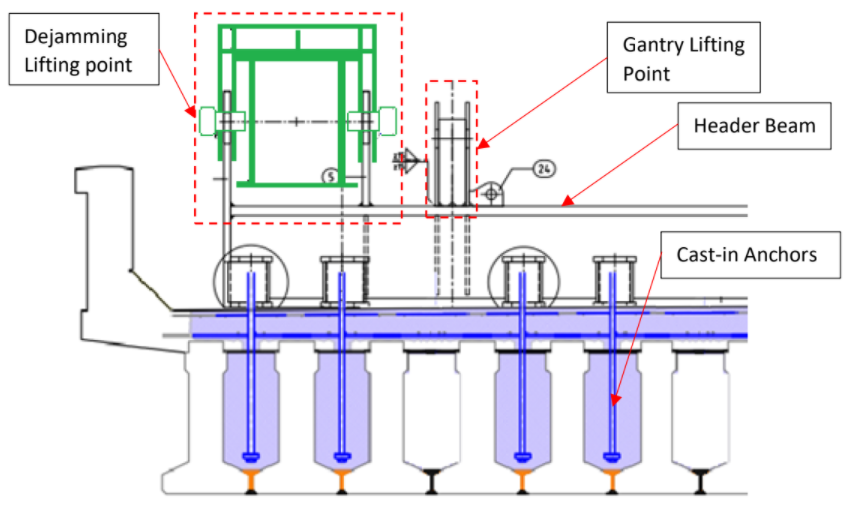
Figure 4 - 'Dejamming' operational set up
Through assessment work and design iterations the engineer was able to establish a working temporary works scheme which did not cause any detrimental effects to the structure or risk its safety in service.
The refurbishment scheme had significant strengths with minimising the risk to site personnel as the majority of works could be done from above the bridge. Furthermore, the scheme eliminated the need for temporary works to be set up, operated and taken down below the bridge within a railway possession which reduced the risk of disruption to passengers using services on the WCML.
The refurbishment scheme was estimated to cost £20 million less than a partial reconstruction scheme. Additionally, the refurbishment scheme had a lower amount of construction materials and carbon cost of the scheme when compared with reconstruction.
When completed, the wider east west rail scheme will provide a much-needed link between East Anglia and West and Central England and will improve the area’s economy and economic mobility as residents will have access to some of England’s fastest growing towns and cities.
LBR Associates Ltd is a start-up company comprising chartered civil engineers with over 10 years professional experience in civil and structural engineering.
The case study demonstrates our staff’s design and assessment capability on a technically challenging and complex infrastructure scheme.
This scheme was delivered by another organisation and was not directly associated with LBR Associates Ltd.