
Asset Data Gathering : Retaining Walls in Stations
Challenge
Following retaining wall collapses at railway stations and identification of deficiencies in the management of the Client’s retaining wall assets, the Client commissioned professional services to undertake asset data gathering at 560 No. railway stations.
Budget
£184,000 (Fixed Fee)
Duration
12 months
The aim of the scheme was to:
Improve the Client’s asset management systems and identify major retaining walls at stations
Make processes more efficient by identifying retaining walls being inspected by multiple parties and included on various databases
Reduce risk to public H&S by trialling a pre-defined risk classification approach on the major retaining walls within the stations
The main challenges of the scheme included:
Integrating data from two very different databases for approximately 1500 No. retaining walls into a single point of reference
Evaluation of available data to identify gaps preventing the completion of the risk classification approach
Planning, managing and undertaking site visits at 560 No. stations while maintaining consistent data gathering and ensuring no increased risk to health, safety & well-being
Quality Management of significantly large data sets
Solution
The LBR Engineer played an integral role in delivering this scheme to programme and budget and was instrumental in developing the quality management processes for data gathering during inspections. Key to the project’s success was the development of a bespoke tracker spreadsheet to record information gathered during the desk study and site visits. This spreadsheet automatically generated an overall risk classification for each retaining wall based on the desk study information and streamlined the data gathering process by identifying where the key gaps in the Client’s database was.
Given the sheer quantity of data being gathered the LBR Engineer proposed automating the data collection process by using portable tablets during site visits. This minimised pre-/post-site visit printing and scanning of information and notes, significantly reduced the duration of pre-/post-site visit activities, saving significant time and money and ensured site engineers had requisite information to hand. Training and methodologies were provided by the LBR Engineer to inspectors to ensure that they were familiar with using the tablets prior to rolling them out. Throughout the site visits, quality management and continuous improvement were undertaken to ensure quality data was gathered.
A sample set of stations was taken through the desk study by the LBR Engineer to develop a clear methodology ensuring that the various resources undertaking the desk study gathered information consistently. This limited rework of data as the scheme progressed. Quality management was also undertaken throughout the desk study to monitor the consistency and quality of the data being gathered.
Following the desk study, the LBR Engineer evaluated the data to understand what to target during the site visits. The evaluation process also identified ambiguities in the Technical Workscope around distances to infrastructure and the type of infrastructure at the toe and crest of retaining walls, which were ironed out prior to undertaking the site visits.
The LBR Engineer identified that fatigue while driving was a high risk to health, safety and well-being of the inspection team. As the teams would be undertaking site visits across the country, effective route planning and working back towards home ensured minimal travel at the end of the day. A generic Risk Assessment and Method Statement (RAMS) was also produced. This was supplemented by dynamic risk assessments at each station to ensure that the inspection team were aware of any variations in risk and additional hazards. Access permits were also obtained for working within stations operated by various organisations.
Following completion of the scheme, a summary and lessons learnt report was produced by the LBR Engineer. This identified improvements to the risk classification approach that would ensure ‘high’ risk retaining walls were more easily identifiable and that smaller ‘low’ risk structures were filtered out.
The Results
The tracker tool provided a single point of reference for all retaining walls within stations. This assisted the Client’s asset management teams in identifying ownership of the retaining walls. Retaining walls being inspected by multiple teams were also identified. This ensured that resources (financial, people and time) could be focused on enhancements of existing infrastructure or new infrastructure, rather than wasted on inspecting the same assets. Knowing the owner of each asset also reduced the likelihood of a retaining wall failing due to inspection regimes not being implemented.
Having a preliminary risk classification of each retaining wall, the Client was able to identify retaining walls requiring prioritisation for safe sustainable management. The tracker tool also identified ‘high risk’ retaining walls enabling targeted inspection regimes.
The implementation of the Plan-Do-Check-Act (PDCA) model for continuous improvement enabled effective asset data gathering through a desk study and site visits. The development of guidance documents for resources undertaking work, and checking deliverables resulted in a refined product and minimal rework.
The LBR Engineer developed a close working relationship with the Client through presentations and regular updates. Through this, the Client was aware and in agreement with the assumptions and improvements made regarding the risk classification approach.
The experience gained during this project is currently being implemented through LBR Associates engagement with Unity Partnership (Oldham Council), where LBR Associates are working to make improvements to the asset management system (Pontis) and ensuring inspections are being undertaken in accordance with DMRB Standards.
LBR Associates Ltd is a start-up company comprising chartered civil engineers with over 10 years professional experience in civil and structural engineering.
The following case study demonstrates our staff’s asset management capability working with a Client to improve their asset management systems.
This scheme was delivered by another organisation and was not directly associated with LBR Associates Ltd.
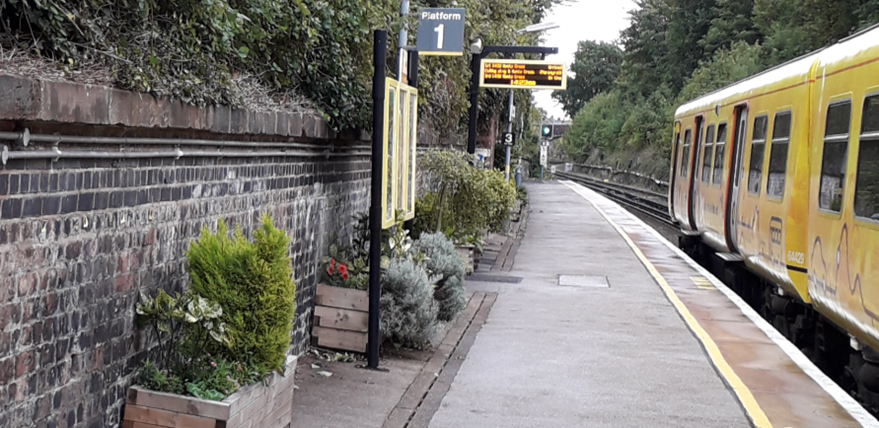
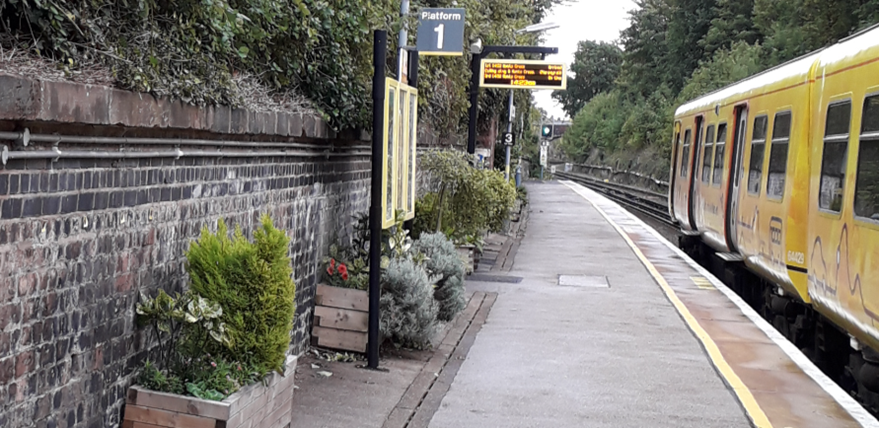
Figure 1 - Retaining wall at a railway station